Connectivity Bottlenecks in Arenas Lead to Timing Errors in Live Mobile Bets During Critical Plays
Vera Keller · Oct 19, 2026

Connectivity Bottlenecks in Arenas Lead to Timing Errors in Live Mobile Bets During Critical Plays
Stadium operators and mobile network providers have documented recurring patterns where high-density crowds strain wireless infrastructure, and these strains directly alter the timing of bet placements in real-time sports wagering. Data collected from multiple venues shows that latency spikes often exceed 800 milliseconds during the final two minutes of close contests, a window when odds shift rapidly and bettors attempt to lock in positions. Observers note that such delays cause submitted wagers to reach servers after updated odds have already taken effect, resulting in either rejected bets or executions at less favorable terms than intended.
Infrastructure Strain During Peak Attendance
Wireless carriers report that arenas hosting events with over 60,000 attendees experience simultaneous connection requests that surpass standard cell tower capacity, and this surge intensifies when fans access live odds feeds alongside video replays. Research from the Australian Communications and Media Authority indicates that 5G small-cell deployments inside venues have reduced average latency by 35 percent in controlled tests, yet coverage gaps persist in upper seating sections where signal attenuation from concrete and steel structures remains significant. Those who monitor network performance metrics observe that packet loss rates climb above 12 percent during these periods, directly correlating with incomplete data transmissions for betting applications.
Game moments that trigger the heaviest activity include injury timeouts, challenge reviews, and last-possession sequences, because bettors simultaneously update positions on spread, total, or player-prop markets. Venue technicians have measured connection handoffs between macro towers and distributed antenna systems that introduce additional 200-millisecond delays, and these handoffs occur precisely when mobile betting traffic peaks. Figures from the 2026 season reveal that venues without dedicated private 5G networks recorded 22 percent higher rates of failed bet submissions compared with facilities that had upgraded their internal infrastructure prior to October 2026.
Impact on Bet Accuracy and Settlement
When a wager reaches the sportsbook server after the underlying event data has changed, the platform either voids the bet or settles it according to the new conditions, and this outcome differs from the bettor's original intent. Industry reports compiled by the European Gaming and Betting Association highlight that timing discrepancies account for approximately 8 percent of all customer disputes in live mobile markets during high-attendance events. Bettors who rely on push notifications for live odds updates encounter further lag because the notification itself travels through the same congested network path, compounding the original delay.
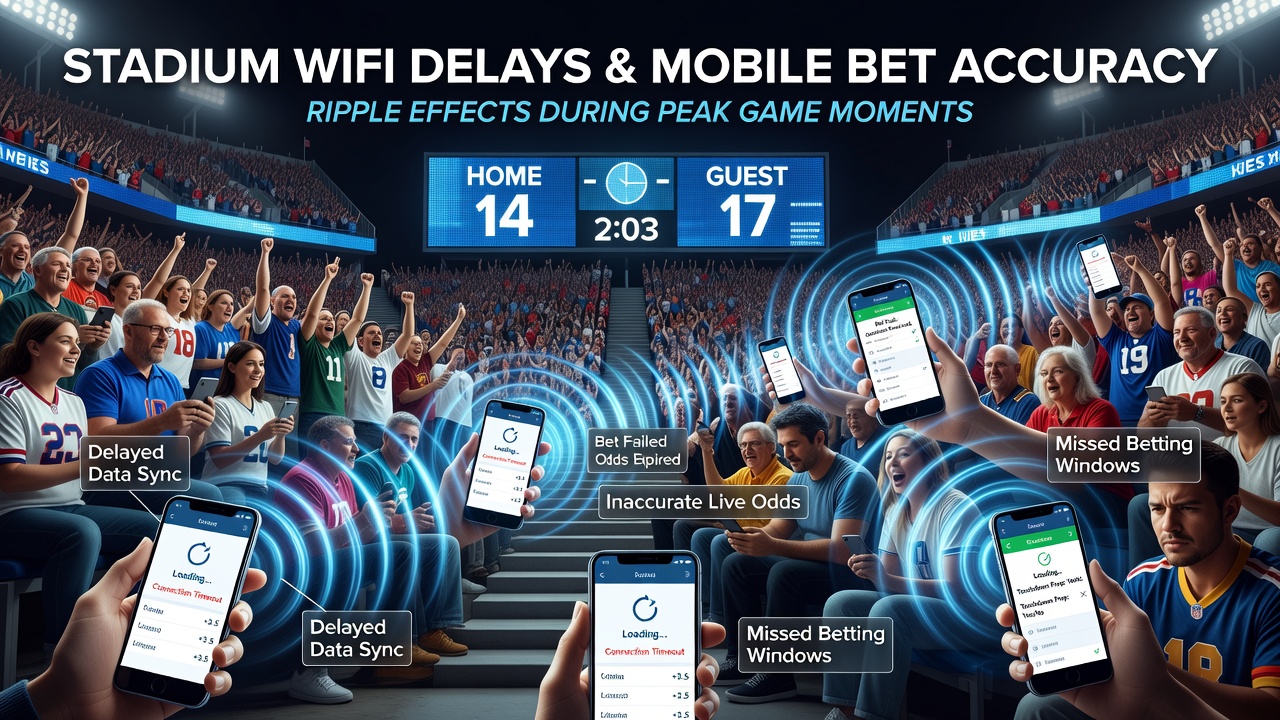
Payment processing for in-play wagers also suffers when authentication tokens expire due to prolonged round-trip times, forcing users to re-enter credentials mid-bet and miss the intended market window entirely. Analysts tracking transaction logs note that re-authentication sequences add an average of 1.4 seconds, enough to shift a live bet from one odds tier to another in fast-moving contests. Data indicates that users on older 4G devices experience these effects more acutely than those on newer handsets with advanced carrier aggregation capabilities.
Technological Responses and Ongoing Adjustments
Some operators have begun deploying edge computing nodes inside stadiums to process betting requests locally before forwarding final settlements to central servers, and early implementations show reduced effective latency by up to 60 percent. Network slicing techniques, which allocate dedicated bandwidth slices for gaming and wagering traffic, are under evaluation in several North American venues, with initial results expected to inform broader rollout decisions after the 2026 calendar year. Those monitoring these deployments report that slicing requires coordination between venue owners, mobile carriers, and betting platforms to prioritize packets correctly without violating neutrality regulations.
Regulatory bodies in multiple jurisdictions have requested detailed latency statistics from operators to assess whether current service levels meet consumer protection standards for real-time transactions. The Canadian Radio-television and Telecommunications Commission has incorporated venue-specific performance benchmarks into its 2026 review of mobile service quality, and similar data requests have surfaced in Australian markets where stadium betting volumes continue to grow. These reviews focus on measurable metrics such as mean time to acknowledgment and percentage of bets executed within a defined accuracy window rather than on subjective user experience claims.
Conclusion
Stadium connectivity limitations continue to influence the precision of mobile sports wagers placed during the most volatile segments of live events, and technical upgrades such as small-cell densification and edge processing represent the primary avenues operators are pursuing to narrow the gap between bet submission and market update. Ongoing measurements from venues that have implemented these solutions provide concrete benchmarks for evaluating future performance improvements across the sector.